Talk to an Expert: 586-786-3920

Hydraulic Pressure Spikes: How Sudden Surges Damage Pumps, Seals, Hoses, and Fittings
hydraulic pressure spikes

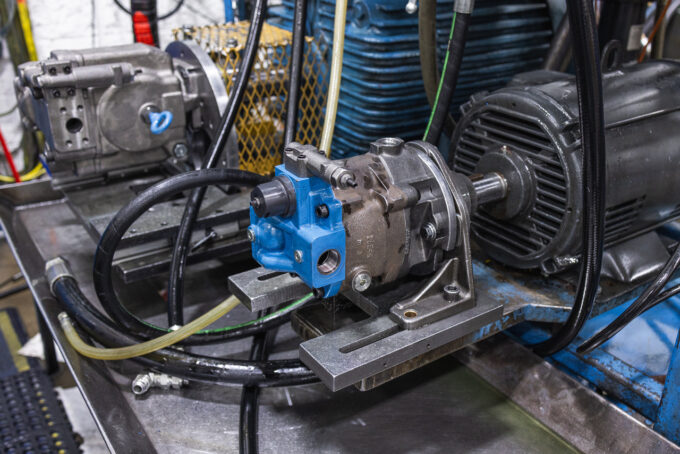
Hydraulic systems are designed to move force with precision, but that force must remain controlled. When pressure rises suddenly beyond normal operating conditions, the result can be more than a brief disturbance. Hydraulic pressure spikes can damage pumps, seals, hoses, fittings, manifolds, and valves, often before an operator realizes anything serious has happened.

At Panagon Systems, we supply hydraulic pumps and parts for demanding equipment, and we understand how damaging pressure events can be. A system may appear healthy during steady operation, yet still experience sudden pressure surges during valve shifts, rapid stops, trapped-pressure conditions, or accumulator discharge. These short events can exceed normal system pressure by a large margin, even if the pressure gauge does not show the peak clearly.

Pressure spikes are dangerous because they act fast. A gauge may respond too slowly to capture the event, while the components absorb the full shock. A hose that is rated for the system’s normal working pressure may still be stressed by repeated spikes. A seal that performs well under steady load may begin to extrude, harden, or crack after repeated shock. A pump that is expected to run smoothly may see damaging loads through its shaft, bearings, and internal wear surfaces.

The key is to treat pressure spikes as a system problem, not just a component problem. Replacing a failed hose or seal may restore the machine temporarily, but the same failure can return if the cause of the surge remains in the circuit. Understanding where spikes come from is the first step toward protecting the full hydraulic system.

Sudden Valve Shifts and Trapped Pressure

Sudden valve shifts are one of the most common sources of hydraulic pressure spikes. When a valve opens or closes too quickly, fluid momentum changes instantly. Oil is not easily compressed, so a rapid change in direction or flow can create a shock wave through the lines. This is similar to what happens when water hammer occurs in piping, but hydraulic systems often operate at much higher pressures and with more expensive components at risk.

Fast directional valve shifts can stop actuator movement abruptly. When a cylinder, motor, or load is moving, the oil in the circuit carries energy. If that movement is halted too quickly, the energy has to go somewhere. It often appears as a pressure spike that travels back through hoses, fittings, manifolds, and the pump circuit. Over time, this repeated shock can loosen fittings, fatigue hoses, and damage seals.

Trapped pressure creates another hazard. This can happen when oil is locked between closed valves, check valves, counterbalance valves, or actuator ports. If the trapped oil heats up, expands, or is acted on by an external load, pressure can rise sharply. A cylinder holding a suspended load, for example, may see pressure increase if the load shifts or settles against a closed circuit. When the trapped pressure is finally released, it can move suddenly and create another damaging surge.

These events are especially hard on seals and hoses. Seals may be forced into gaps or damaged by sudden movement. Hoses may flex violently, stressing reinforcement layers and end fittings. Fittings can loosen under repeated impulse loading, leading to leaks that seem to appear without warning.

To reduce these risks, valve shift timing should match the application. Softer shifting, proportional control, flow control, and proper sequencing can reduce sudden stops and starts. Circuits that hold loads should also be reviewed for trapped-pressure risks and safe pressure relief paths.

Undersized Lines, Restrictions, and Pump Damage

Line sizing has a direct effect on pressure behavior. Undersized hydraulic lines force oil through a smaller passage than the flow rate requires. That increases velocity, pressure drop, and heat. Under steady operation, this may already reduce efficiency. During fast valve movement or sudden load change, it can also intensify hydraulic pressure spikes.

When oil velocity is too high, the system becomes more sensitive to abrupt changes. A rapid valve closure in an undersized line can create a larger surge than the same event in a properly sized line. Restrictions make the problem worse. A clogged filter, crushed hose, undersized fitting, sharp elbow, or partially closed valve can create local pressure changes that contribute to shock loads.

Pumps can suffer from these conditions in several ways. On the outlet side, sudden pressure surges can load the rotating group, bearings, shaft, and control components. Repeated shock may increase internal leakage, contribute to wear, or destabilize compensator behavior. On the inlet side, restrictions can starve the pump, leading to cavitation, noise, heat, and internal damage. A system with both inlet restriction and outlet spikes places the pump under stress from both directions.

Relief valves help protect a system, but they are not a complete solution to every pressure spike. Some spikes happen too quickly for a relief valve to respond fully. Others occur in sections of the circuit where the relief valve cannot see the trapped pressure. This is why prevention matters. Proper line sizing, clean filters, correct hose routing, and well-placed pressure protection are all part of a stable hydraulic design.

A practical inspection should include line diameter, hose condition, bend radius, fitting size, port size, and filter differential pressure. If hoses jump during operation, if fittings repeatedly loosen, or if pressure instability appears during fast function changes, the circuit may be creating shock that needs to be addressed before components fail.

Accumulator Control, Prevention, and When to Call Panagon Systems

Accumulators can protect a hydraulic system when they are selected, charged, and controlled correctly. They can absorb shock, store energy, and smooth pressure changes. Poor accumulator control, however, can create serious pressure problems. An accumulator with the wrong precharge may fail to absorb spikes or may discharge too aggressively into the circuit. Either condition can damage pumps, seals, hoses, and fittings.

If precharge is too low, the accumulator may fill with too much oil and provide limited cushioning when a surge occurs. If precharge is too high, the accumulator may not accept enough oil to absorb the spike. If isolation valves, check valves, or dump valves are misapplied, the accumulator may trap pressure or release energy at the wrong time. These issues can make the system unpredictable and dangerous.

Preventing hydraulic pressure spikes starts with a careful review of how the machine operates. Look at when spikes happen. Do they occur during sudden stops, fast valve shifts, load reversals, cold starts, or accumulator discharge? Review pressure settings, valve timing, hose movement, line sizing, and fluid condition. Check whether the pump control style matches the circuit and whether relief devices are placed where the pressure event actually occurs.

Maintenance also matters. Inspect hoses for bulging, abrasion, cracked covers, and movement at fittings. Check seals for extrusion, tearing, or repeated leakage. Review filters for debris that may indicate component wear. Watch for pump noise, rising temperature, and pressure instability, since these can show that shock loads are already affecting system health.

Hydraulic pressure spikes should not be treated as normal wear. They are warnings that force is being released too quickly or controlled in the wrong place. When corrected early, the system becomes safer, quieter, and more reliable. When ignored, the same pressure events can lead to repeated hose failures, seal damage, pump wear, and costly downtime.

If your equipment is experiencing pressure surges, repeated seal leaks, hose failures, pump noise, or unexplained fitting damage, contact Panagon Systems. Our team can help you identify the right hydraulic pumps and parts for your application and support a more reliable path toward stable system performance.
Related posts

Hydraulic Fluid Types: Choosing the Right Oil for Your System

Hydraulic systems are designed to move force with precision, but that force must remain controlled. When pressure rises suddenly beyond normal operating conditions, the result can be more than a brief disturbance. Hydraulic pressure spikes can damage pumps, seals, hoses, fittings, manifolds, and valves, often before an operator realizes anything serious has happened.

At Panagon Systems, we supply hydraulic pumps and parts for demanding equipment, and we understand how damaging pressure events can be. A system may appear healthy during steady operation, yet still experience sudden pressure surges during valve shifts, rapid stops, trapped-pressure conditions, or accumulator discharge. These short events can exceed normal system pressure by a large margin, even if the pressure gauge does not show the peak clearly.

Pressure spikes are dangerous because they act fast. A gauge may respond too slowly to capture the event, while the components absorb the full shock. A hose that is rated for the system’s normal working pressure may still be stressed by repeated spikes. A seal that performs well under steady load may begin to extrude, harden, or crack after repeated shock. A pump that is expected to run smoothly may see damaging loads through its shaft, bearings, and internal wear surfaces.

The key is to treat pressure spikes as a system problem, not just a component problem. Replacing a failed hose or seal may restore the machine temporarily, but the same failure can return if the cause of the surge remains in the circuit. Understanding where spikes come from is the first step toward protecting the full hydraulic system.

Sudden Valve Shifts and Trapped Pressure

Sudden valve shifts are one of the most common sources of hydraulic pressure spikes. When a valve opens or closes too quickly, fluid momentum changes instantly. Oil is not easily compressed, so a rapid change in direction or flow can create a shock wave through the lines. This is similar to what happens when water hammer occurs in piping, but hydraulic systems often operate at much higher pressures and with more expensive components at risk.

Fast directional valve shifts can stop actuator movement abruptly. When a cylinder, motor, or load is moving, the oil in the circuit carries energy. If that movement is halted too quickly, the energy has to go somewhere. It often appears as a pressure spike that travels back through hoses, fittings, manifolds, and the pump circuit. Over time, this repeated shock can loosen fittings, fatigue hoses, and damage seals.

Trapped pressure creates another hazard. This can happen when oil is locked between closed valves, check valves, counterbalance valves, or actuator ports. If the trapped oil heats up, expands, or is acted on by an external load, pressure can rise sharply. A cylinder holding a suspended load, for example, may see pressure increase if the load shifts or settles against a closed circuit. When the trapped pressure is finally released, it can move suddenly and create another damaging surge.

These events are especially hard on seals and hoses. Seals may be forced into gaps or damaged by sudden movement. Hoses may flex violently, stressing reinforcement layers and end fittings. Fittings can loosen under repeated impulse loading, leading to leaks that seem to appear without warning.

To reduce these risks, valve shift timing should match the application. Softer shifting, proportional control, flow control, and proper sequencing can reduce sudden stops and starts. Circuits that hold loads should also be reviewed for trapped-pressure risks and safe pressure relief paths.

Undersized Lines, Restrictions, and Pump Damage

Line sizing has a direct effect on pressure behavior. Undersized hydraulic lines force oil through a smaller passage than the flow rate requires. That increases velocity, pressure drop, and heat. Under steady operation, this may already reduce efficiency. During fast valve movement or sudden load change, it can also intensify hydraulic pressure spikes.

When oil velocity is too high, the system becomes more sensitive to abrupt changes. A rapid valve closure in an undersized line can create a larger surge than the same event in a properly sized line. Restrictions make the problem worse. A clogged filter, crushed hose, undersized fitting, sharp elbow, or partially closed valve can create local pressure changes that contribute to shock loads.

Pumps can suffer from these conditions in several ways. On the outlet side, sudden pressure surges can load the rotating group, bearings, shaft, and control components. Repeated shock may increase internal leakage, contribute to wear, or destabilize compensator behavior. On the inlet side, restrictions can starve the pump, leading to cavitation, noise, heat, and internal damage. A system with both inlet restriction and outlet spikes places the pump under stress from both directions.

Relief valves help protect a system, but they are not a complete solution to every pressure spike. Some spikes happen too quickly for a relief valve to respond fully. Others occur in sections of the circuit where the relief valve cannot see the trapped pressure. This is why prevention matters. Proper line sizing, clean filters, correct hose routing, and well-placed pressure protection are all part of a stable hydraulic design.

A practical inspection should include line diameter, hose condition, bend radius, fitting size, port size, and filter differential pressure. If hoses jump during operation, if fittings repeatedly loosen, or if pressure instability appears during fast function changes, the circuit may be creating shock that needs to be addressed before components fail.

Accumulator Control, Prevention, and When to Call Panagon Systems

Accumulators can protect a hydraulic system when they are selected, charged, and controlled correctly. They can absorb shock, store energy, and smooth pressure changes. Poor accumulator control, however, can create serious pressure problems. An accumulator with the wrong precharge may fail to absorb spikes or may discharge too aggressively into the circuit. Either condition can damage pumps, seals, hoses, and fittings.

If precharge is too low, the accumulator may fill with too much oil and provide limited cushioning when a surge occurs. If precharge is too high, the accumulator may not accept enough oil to absorb the spike. If isolation valves, check valves, or dump valves are misapplied, the accumulator may trap pressure or release energy at the wrong time. These issues can make the system unpredictable and dangerous.

Preventing hydraulic pressure spikes starts with a careful review of how the machine operates. Look at when spikes happen. Do they occur during sudden stops, fast valve shifts, load reversals, cold starts, or accumulator discharge? Review pressure settings, valve timing, hose movement, line sizing, and fluid condition. Check whether the pump control style matches the circuit and whether relief devices are placed where the pressure event actually occurs.

Maintenance also matters. Inspect hoses for bulging, abrasion, cracked covers, and movement at fittings. Check seals for extrusion, tearing, or repeated leakage. Review filters for debris that may indicate component wear. Watch for pump noise, rising temperature, and pressure instability, since these can show that shock loads are already affecting system health.

Hydraulic pressure spikes should not be treated as normal wear. They are warnings that force is being released too quickly or controlled in the wrong place. When corrected early, the system becomes safer, quieter, and more reliable. When ignored, the same pressure events can lead to repeated hose failures, seal damage, pump wear, and costly downtime.

If your equipment is experiencing pressure surges, repeated seal leaks, hose failures, pump noise, or unexplained fitting damage, contact Panagon Systems. Our team can help you identify the right hydraulic pumps and parts for your application and support a more reliable path toward stable system performance.
Hydraulic Reservoir Design: Why Tank Size and Layout Matter

Hydraulic systems are designed to move force with precision, but that force must remain controlled. When pressure rises suddenly beyond normal operating conditions, the result can be more than a brief disturbance. Hydraulic pressure spikes can damage pumps, seals, hoses, fittings, manifolds, and valves, often before an operator realizes anything serious has happened.

At Panagon Systems, we supply hydraulic pumps and parts for demanding equipment, and we understand how damaging pressure events can be. A system may appear healthy during steady operation, yet still experience sudden pressure surges during valve shifts, rapid stops, trapped-pressure conditions, or accumulator discharge. These short events can exceed normal system pressure by a large margin, even if the pressure gauge does not show the peak clearly.

Pressure spikes are dangerous because they act fast. A gauge may respond too slowly to capture the event, while the components absorb the full shock. A hose that is rated for the system’s normal working pressure may still be stressed by repeated spikes. A seal that performs well under steady load may begin to extrude, harden, or crack after repeated shock. A pump that is expected to run smoothly may see damaging loads through its shaft, bearings, and internal wear surfaces.

The key is to treat pressure spikes as a system problem, not just a component problem. Replacing a failed hose or seal may restore the machine temporarily, but the same failure can return if the cause of the surge remains in the circuit. Understanding where spikes come from is the first step toward protecting the full hydraulic system.

Sudden Valve Shifts and Trapped Pressure

Sudden valve shifts are one of the most common sources of hydraulic pressure spikes. When a valve opens or closes too quickly, fluid momentum changes instantly. Oil is not easily compressed, so a rapid change in direction or flow can create a shock wave through the lines. This is similar to what happens when water hammer occurs in piping, but hydraulic systems often operate at much higher pressures and with more expensive components at risk.

Fast directional valve shifts can stop actuator movement abruptly. When a cylinder, motor, or load is moving, the oil in the circuit carries energy. If that movement is halted too quickly, the energy has to go somewhere. It often appears as a pressure spike that travels back through hoses, fittings, manifolds, and the pump circuit. Over time, this repeated shock can loosen fittings, fatigue hoses, and damage seals.

Trapped pressure creates another hazard. This can happen when oil is locked between closed valves, check valves, counterbalance valves, or actuator ports. If the trapped oil heats up, expands, or is acted on by an external load, pressure can rise sharply. A cylinder holding a suspended load, for example, may see pressure increase if the load shifts or settles against a closed circuit. When the trapped pressure is finally released, it can move suddenly and create another damaging surge.

These events are especially hard on seals and hoses. Seals may be forced into gaps or damaged by sudden movement. Hoses may flex violently, stressing reinforcement layers and end fittings. Fittings can loosen under repeated impulse loading, leading to leaks that seem to appear without warning.

To reduce these risks, valve shift timing should match the application. Softer shifting, proportional control, flow control, and proper sequencing can reduce sudden stops and starts. Circuits that hold loads should also be reviewed for trapped-pressure risks and safe pressure relief paths.

Undersized Lines, Restrictions, and Pump Damage

Line sizing has a direct effect on pressure behavior. Undersized hydraulic lines force oil through a smaller passage than the flow rate requires. That increases velocity, pressure drop, and heat. Under steady operation, this may already reduce efficiency. During fast valve movement or sudden load change, it can also intensify hydraulic pressure spikes.

When oil velocity is too high, the system becomes more sensitive to abrupt changes. A rapid valve closure in an undersized line can create a larger surge than the same event in a properly sized line. Restrictions make the problem worse. A clogged filter, crushed hose, undersized fitting, sharp elbow, or partially closed valve can create local pressure changes that contribute to shock loads.

Pumps can suffer from these conditions in several ways. On the outlet side, sudden pressure surges can load the rotating group, bearings, shaft, and control components. Repeated shock may increase internal leakage, contribute to wear, or destabilize compensator behavior. On the inlet side, restrictions can starve the pump, leading to cavitation, noise, heat, and internal damage. A system with both inlet restriction and outlet spikes places the pump under stress from both directions.

Relief valves help protect a system, but they are not a complete solution to every pressure spike. Some spikes happen too quickly for a relief valve to respond fully. Others occur in sections of the circuit where the relief valve cannot see the trapped pressure. This is why prevention matters. Proper line sizing, clean filters, correct hose routing, and well-placed pressure protection are all part of a stable hydraulic design.

A practical inspection should include line diameter, hose condition, bend radius, fitting size, port size, and filter differential pressure. If hoses jump during operation, if fittings repeatedly loosen, or if pressure instability appears during fast function changes, the circuit may be creating shock that needs to be addressed before components fail.

Accumulator Control, Prevention, and When to Call Panagon Systems

Accumulators can protect a hydraulic system when they are selected, charged, and controlled correctly. They can absorb shock, store energy, and smooth pressure changes. Poor accumulator control, however, can create serious pressure problems. An accumulator with the wrong precharge may fail to absorb spikes or may discharge too aggressively into the circuit. Either condition can damage pumps, seals, hoses, and fittings.

If precharge is too low, the accumulator may fill with too much oil and provide limited cushioning when a surge occurs. If precharge is too high, the accumulator may not accept enough oil to absorb the spike. If isolation valves, check valves, or dump valves are misapplied, the accumulator may trap pressure or release energy at the wrong time. These issues can make the system unpredictable and dangerous.

Preventing hydraulic pressure spikes starts with a careful review of how the machine operates. Look at when spikes happen. Do they occur during sudden stops, fast valve shifts, load reversals, cold starts, or accumulator discharge? Review pressure settings, valve timing, hose movement, line sizing, and fluid condition. Check whether the pump control style matches the circuit and whether relief devices are placed where the pressure event actually occurs.

Maintenance also matters. Inspect hoses for bulging, abrasion, cracked covers, and movement at fittings. Check seals for extrusion, tearing, or repeated leakage. Review filters for debris that may indicate component wear. Watch for pump noise, rising temperature, and pressure instability, since these can show that shock loads are already affecting system health.

Hydraulic pressure spikes should not be treated as normal wear. They are warnings that force is being released too quickly or controlled in the wrong place. When corrected early, the system becomes safer, quieter, and more reliable. When ignored, the same pressure events can lead to repeated hose failures, seal damage, pump wear, and costly downtime.

If your equipment is experiencing pressure surges, repeated seal leaks, hose failures, pump noise, or unexplained fitting damage, contact Panagon Systems. Our team can help you identify the right hydraulic pumps and parts for your application and support a more reliable path toward stable system performance.
Leave a Comment

Leave a Reply

Your email address will not be published.


Top

Your Choice for OEM Quality Replacement Components

Our manufacturing facility houses many CNC machines capable of producing high-quality hydraulic components and replacement parts.

Contact
Parts Resources Contact