Hydraulic Pump Rebuild or Repair: How to Choose the Right Fix

Hydraulic pumps rarely fail all at once. More often, performance declines in stages, and the right service decision can restore reliability without overspending. The challenge is choosing between a targeted repair and a complete hydraulic pump rebuild. At Panagon Systems, we evaluate piston pumps every day, and we see how small issues can sometimes be corrected by restoring key surfaces and dimensions. We also see cases where repairs cannot fully return the pump to like-new function, even if individual parts look salvageable. Knowing the difference matters because it affects uptime, operating costs, and the life of the entire hydraulic system.
What a Repair Can Do and Where It Falls Short
A repair focuses on restoring one or more components so the pump can return to service. Many hydraulic pump components are repairable if critical specifications can be precisely restored. That includes tolerance, surface finish, and unit dimensions that affect sealing and flow. In the right scenario, repairs can correct a localized problem and return the pump to acceptable performance quickly.

Common repair candidates include housings with minor wear that can be reconditioned, mounting surfaces that can be restored, and select sealing interfaces that can be brought back within specification. A repair may also address external issues such as damaged ports, worn fittings, or a shaft seal leak. When the rotating group remains healthy and the pump has not been run in a severely contaminated condition, a repair can be the most efficient solution.
Still, repairing a part does not always re-establish the full functionality that part provided as a new component. Hydraulic piston pumps depend on a balance of clearances across multiple surfaces. If wear is widespread, if heat has altered surfaces, or if hard particles have circulated through the unit, restoring one component may not correct internal leakage or stability issues. In those cases, the pump may run, but it may not run correctly. That is where a rebuild becomes the better choice.
A practical way to think about it is risk. A repair can be the right answer when the problem is limited and the remaining components are within tolerance. When wear has spread across critical pairs, a repair can leave the pump vulnerable to repeat failure. The cost of a second downtime event often outweighs the savings of a minimal repair.
What a Hydraulic Pump Rebuild Includes
A hydraulic pump rebuild is a comprehensive restoration process. It requires identifying bad components and rebuilding the pump with new parts. By replacing, rather than repairing parts, our technicians can deliver a fully functional pump that operates according to the original specifications. The point is not simply to make the pump turn again. The point is to return performance, efficiency, and control to the standard you expect from a healthy unit.
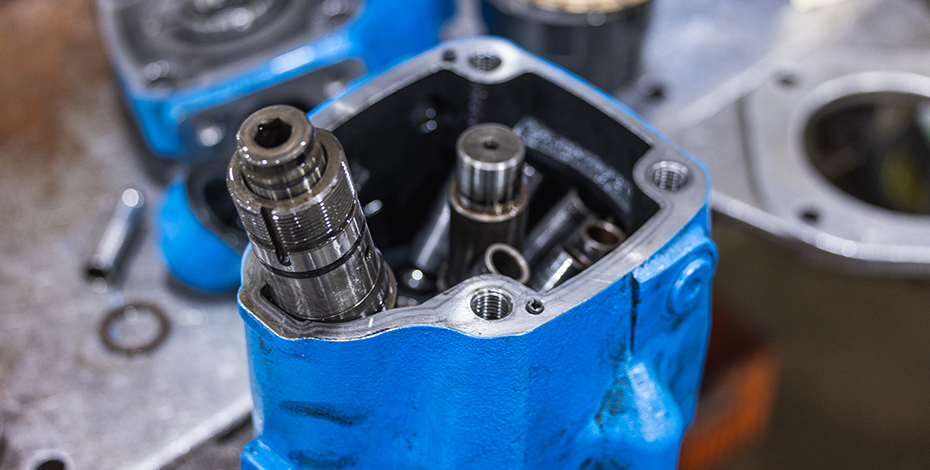
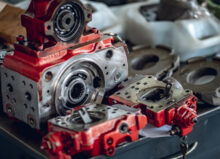
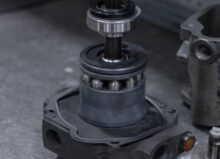
A rebuild typically begins with full disassembly and cleaning. Components are inspected for wear patterns, scoring, discoloration from heat, and damage from contamination. Measurements are taken at key surfaces and interfaces. Rotating group components are evaluated for wear that affects sealing and volumetric efficiency. Bearings are inspected for roughness, looseness, and spalling. Valve and control elements are examined for sticking, erosion, or internal leakage.
From there, rebuild work focuses on replacement. Worn bearings, seals, and O-rings are replaced. Damaged rotating group parts are replaced where necessary to restore performance. Control components that affect stability and response are brought back to specification. Surfaces that require restoration are corrected to meet dimensional requirements, but only when restoration can be achieved precisely and reliably. The rebuild is then completed with careful assembly procedures, correct torque, and proper lubrication practices. The result is a pump that behaves like it should, not a pump that simply passes a brief run check.
A rebuild also delivers predictability. Instead of hoping that repaired parts will hold up through the next duty cycle, you receive a pump built to meet original operating expectations. For many operations, that predictability is the true value of a hydraulic pump rebuild, especially when the pump drives core functions and downtime is costly.
How to Decide: Repair or Rebuild Based on Damage Severity
Knowing whether you need a hydraulic pump repair or rebuild depends on the severity of the damage to your component. That severity can show up in several ways, some obvious and some subtle.
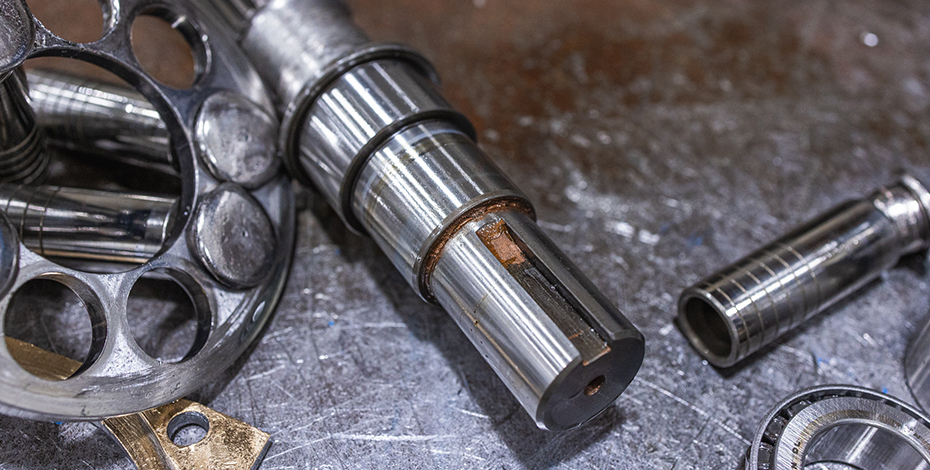
Start with performance symptoms. If the pump has significant pressure drops under normal loads, rising case drain flow, persistent noise, and elevated operating temperature, internal wear is likely widespread. These symptoms often indicate increased internal leakage, damaged wear surfaces, or bearing issues that affect alignment. When multiple symptoms occur together, a rebuild is usually the safer and more cost-effective path.
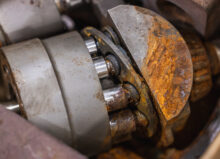
Next, consider contamination and heat history. A pump that ran with dirty oil or water contamination often has distributed wear. Hard particles can score multiple surfaces, and water can reduce lubricity and accelerate corrosion. Heat can change surface properties and contribute to varnish that affects controls. In these cases, individual repairs may not return the pump to stable operation. A rebuild, with replacement of affected parts, is often recommended.
Consider the duty cycle and the cost of downtime. A minimal repair might be acceptable for a backup machine with light use. For a primary production unit, uncertainty is expensive. If the pump is critical, a rebuild can reduce the chance of a repeat outage and protect connected components such as valves and motors.
Also consider the type of damage. Some issues are localized and lend themselves to repair, such as a minor external leak or a single damaged interface that can be restored. Others, such as bearing wear and rotating group wear, tend to spread and accelerate. When bearing wear is present, alignment changes can stress multiple parts. When the rotating group is damaged, efficiency drops and heat rises, which accelerates wear elsewhere. These patterns often point toward rebuild.
Finally, be realistic about what restoration can accomplish. If a surface can be restored while maintaining exact tolerances and correct geometry, repair can work. If restoration is likely to leave the part out of spec, even by a small amount, the pump may fail to deliver the performance you need. Replacing parts within a rebuild is the most direct way to return full functionality.
What to Expect When Panagon Systems Inspects Your Pump
The best decision is based on measurements, not guesswork. When you send your piston pump to us for an inspection, our team will let you know whether a repair or a rebuild is the most effective solution for you. We begin by documenting the condition of the unit and the symptoms you reported. Then we disassemble and inspect key components, looking for wear signatures that indicate inlet issues, contamination, heat stress, or alignment problems.

We evaluate whether critical tolerances can be restored reliably. If a repair can return the unit to stable performance, we explain what will be repaired and why that approach makes sense. If a repair would leave the pump short of full function, we recommend a hydraulic pump rebuild and outline what components will be replaced to bring the unit back to original specifications. Our objective is to provide a clear, practical path that matches your operational needs.
A well executed rebuild is also an opportunity to prevent repeat failures. Along with the service recommendation, we can share insights into what likely caused the wear. That might include suction restrictions, aeration, filtration limits, or fluid condition issues. Correcting those upstream factors helps protect the repaired or rebuilt pump and improves system reliability.
Hydraulic pumps drive productivity, and the right service decision protects your schedule. If you are seeing performance loss, unusual noise, rising temperature, or leaks, it is time to act. Contact Panagon Systems to discuss your pump and arrange an inspection. We will help you determine whether a targeted repair can restore the unit or whether a hydraulic pump rebuild is the best path to full functionality and long-term reliability.