OEM Equivalent Hydraulic Pump Manufacturing: Precision, Cleanliness, and Validation
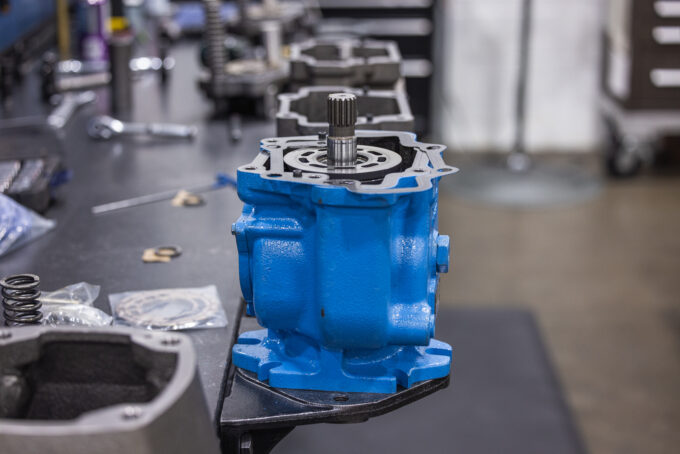
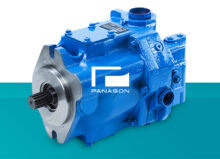
When a hydraulic pump fails, the replacement decision affects far more than the next startup. It affects uptime, operating cost, and the confidence your operators have in the machine. At Panagon Systems, we manufacture hydraulic pumps and motors engineered to meet demanding performance requirements, including OEM form, fit, and function. Customers often ask what “OEM equivalent” truly means in practice. For us, it means disciplined manufacturing, repeatable inspection, and performance validation that confirms a pump will operate as expected in real service. If you are specifying an OEM equivalent hydraulic pump, you deserve clarity on how it is built, how it is tested, and how quality is controlled from start to finish.
What “OEM Equivalent” Means at Panagon Systems
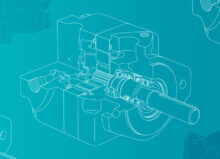
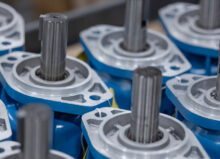
An OEM equivalent hydraulic pump is not defined by marketing language. It is defined by measurable outcomes. The pump must mount correctly, connect correctly, and operate correctly within the same performance envelope the original equipment required. That includes displacement, pressure capability, efficiency, control response, and durability under duty-cycle stress. The pump must also integrate with the system, meaning port locations, shaft configuration, mounting flange, rotation, and control interfaces must match expectations so installation does not become a redesign project.
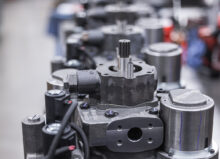
At Panagon Systems, we approach OEM equivalency as an engineering discipline. We begin with the specifications that matter most to your application, not just a model label. Those specifications include operating pressure range, speed range, required flow, acceptable case drain, and control type. We then ensure the pump’s physical attributes align with the original, including envelope dimensions, pilot and bolt pattern, shaft size and keying, and porting geometry. The aim is to deliver a replacement that functions as a true drop-in solution.
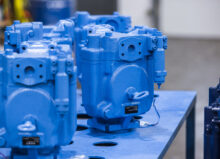
Equivalency also includes consistency. One successful unit is not enough. Quality must be repeatable across batches and across time. That is why our process focuses on controlled manufacturing and verification. An OEM equivalent hydraulic pump must perform like the unit you are replacing, not just on the day it ships, but throughout its service life.
Manufacturing Discipline That Protects Performance
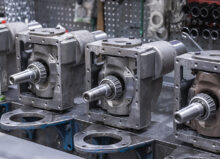
Performance begins with precision. Hydraulic pumps rely on tight internal tolerances to maintain efficiency and stability. Small dimensional errors can increase internal leakage, raise temperature, and shorten component life. Our manufacturing approach centers on controlling the details that directly affect reliability.
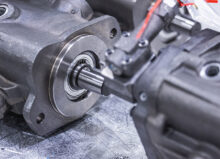
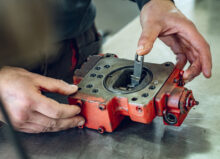
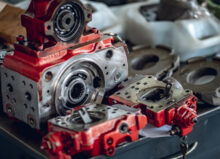
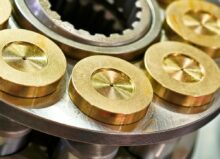
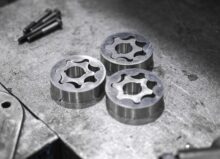
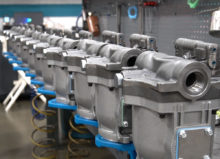
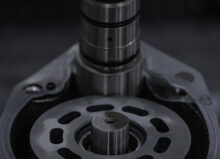
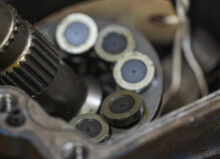
We start by aligning the build to the correct design configuration. That includes selecting the proper displacement group, rotating group geometry, and control architecture. During assembly, components are handled as matched sets where required, and critical interfaces are verified before final build. We pay particular attention to wear surfaces and sealing interfaces because those areas determine how efficiently a pump converts mechanical input into hydraulic output.
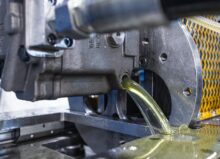
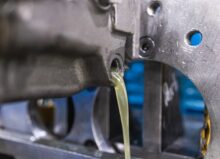
Cleanliness is treated as a manufacturing requirement, not a final step. Particulates introduced during assembly can create immediate wear at startup and contaminate the entire system. Our processes emphasize clean handling, controlled work areas, and disciplined flushing practices that reduce the risk of debris entering the pump. We also ensure that sealing surfaces and threaded connections are prepared correctly to protect against leaks, air ingress, and premature seal wear.
The end result is a pump built with attention to geometry, alignment, and surface integrity. These factors are essential for maintaining stable pressure, predictable response, and efficient operation across varying loads. An OEM equivalent hydraulic pump must do more than move fluid. It must do so with the control and durability the machine was designed to deliver.
Testing That Confirms Real-World Function
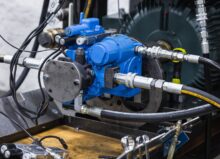
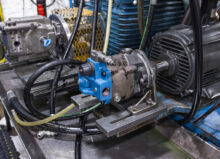
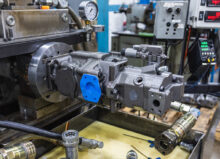
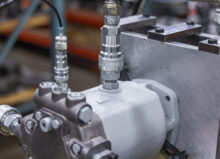
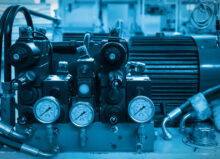
A pump can look right and still perform wrong. That is why performance validation is central to our approach. At Panagon Systems, we use controlled testing to confirm that each OEM equivalent hydraulic pump meets expected operating behavior before it reaches your dock.
Testing evaluates more than a pass or fail condition. We verify output under pressure, stability across speed, and control response consistent with the pump’s intended application. Key metrics include flow performance, pressure capability, and evidence of abnormal leakage behavior. We also look for signs of instability, such as hunting, surging, or irregular response, which can indicate a control issue or an internal tolerance problem.
Temperature behavior is another critical indicator. Excess heat can signal internal leakage, friction, or abnormal loading. A stable thermal profile under representative test conditions helps confirm that the pump will operate efficiently in the field. Noise and vibration characteristics are also observed because they can reveal inlet sensitivity, bearing concerns, or hydraulic instability.
Testing is valuable because it reduces uncertainty. It converts assumptions into measurements. For customers, this means fewer surprises during startup and a faster return to productive work. When you specify an OEM equivalent hydraulic pump, you are not simply buying a component. You are buying confidence that the unit will behave predictably under the demands of your system.
Quality Control That Supports Long-Term Reliability
Quality control is not a single checkpoint. It is a system that supports consistency from incoming materials to finished product. At Panagon Systems, we focus on the controls that most directly influence reliability and repeatability.
Dimensional verification is central. Critical dimensions that govern fit and interface are checked to ensure the pump will install without modification. Just as important, internal checks confirm that the build supports efficiency and stable control. When tolerances drift, performance drifts. That is why consistent measurement practices matter.
We also emphasize traceability and documentation. Clear build information supports repeat orders and simplifies fleet standardization. If you run multiple machines with similar requirements, repeatability becomes a cost advantage. Standardized pumps, consistent interfaces, and predictable performance reduce training load, lower spare inventory complexity, and make maintenance planning easier.
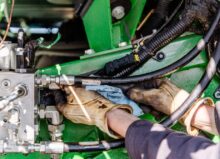
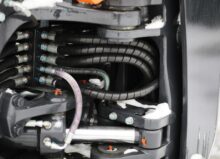
Equivalency is also supported by problem prevention. Many pump failures begin outside the pump, driven by contamination, aeration, cavitation, or poor temperature management. While these conditions are not caused by the pump itself, they influence service life. Our approach includes practical guidance on installation and operating conditions that protect the pump’s performance. The more stable the inlet conditions, the cleaner the fluid, and the more controlled the temperature, the longer any pump will last.
Choosing an OEM equivalent hydraulic pump should not feel like a gamble. It should feel like a disciplined decision backed by manufacturing control and validation testing. That is the standard we aim to deliver at Panagon Systems. If you need an OEM equivalent hydraulic pump that matches your original equipment requirements and supports reliable operation, contact Panagon Systems. Our team will help you identify the right configuration, ensure correct fit, and deliver a unit validated for performance so your equipment can return to work with confidence.